Emma, Bandit, and 7.5 acres
Emma was fourteen when she started working with dogs, in rescue centres. She went on to train bomb and drug detection dogs. It's work where reading an animal accurately isn't a nice-to-have.
In 2019 she took all of it and started Bandits Dog Town.
The idea was simple enough. Most dogs in this part of London get a lead walk round streets they already know, twice a day, and that's their lot. Emma wanted somewhere they could be off-lead for hours, on ground worth exploring, with someone watching who actually knows what they're looking at.
Seven years on, that's still the whole business. Same field, same standards, same person collecting your dog in the morning.
Emma is renewing her Level 3 Diploma in Animal Care, Welfare and Behaviour, an accredited qualification recognised by Ofqual and for licensing purposes.
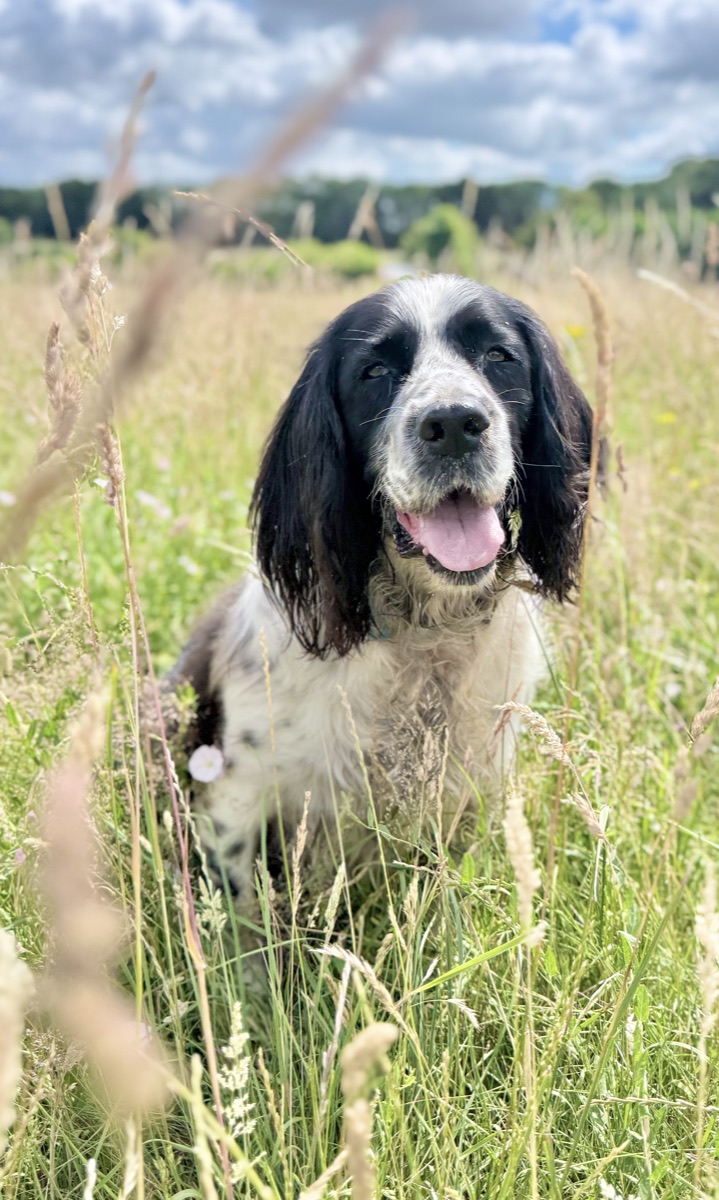
The boss, in every sense that matters
He's trained in splitting. It's a real behaviour, not a nickname. Socially skilled dogs use it to interrupt tension between other dogs before it escalates: putting themselves between two animals, breaking a stare, redirecting the energy somewhere harmless.
Most dogs who split do it instinctively. Bandit's has been deliberately trained and sharpened, which makes him something like a permanent mediator on every walk. When a group of dogs stays calm across a whole afternoon, he's a large part of the reason.
Splitting isn't breed-specific. It's social skill. But it turns up more often in herding breeds like collies and Australian shepherds, working breeds like labradors and standard poodles, and spaniels and gundogs. Bandit's a springer, which is squarely in the third camp.
Five steps, in order
-
Initial enquiry.
Tell us about your dog.
-
Information email and paperwork.
Once it's returned, that confirms you want to use us as a service.
-
Meet and greet.
Every dog is assessed before joining. We're looking at whether the pack suits them as much as whether they suit the pack.
-
Trial session.
A shorter session, with your dog slowly introduced to some of the pack.
-
First day.
Collected in the morning, home in the afternoon, photos throughout.